The NAIOP Research Foundation recently released a 20-page report on Hybrid Work and the Future of Office. The study draws from survey and market data provided by CBRE to explore how occupiers are approaching their use of office space, and the building locations, features and amenities they prioritize.
Following is a quick summary of key findings and a download link to the full report.
- Hybrid Work Trends: The rise of hybrid work has led to a reduction in individual office space, but there's an increased demand for flexible shared spaces for meetings and coworking, with occupants willing to pay on a per-use basis or through lease provisions.
- Quality Over Quantity: Many occupiers are opting for smaller office footprints in modern, conveniently located buildings with amenities to attract workers, emphasizing the importance of a productive and appealing workspace.
- Commuter-Friendly: Occupiers prioritize office buildings with easy commuting options, ample parking, public transit access, and on-site amenities. Sustainability and access to outdoor space are increasingly important considerations.
- Growing Office Utilization: Despite changes in work patterns, 38 percent of occupiers expect office utilization to increase, and 60 percent report that utilization has stabilized, indicating a continued role for traditional office spaces.
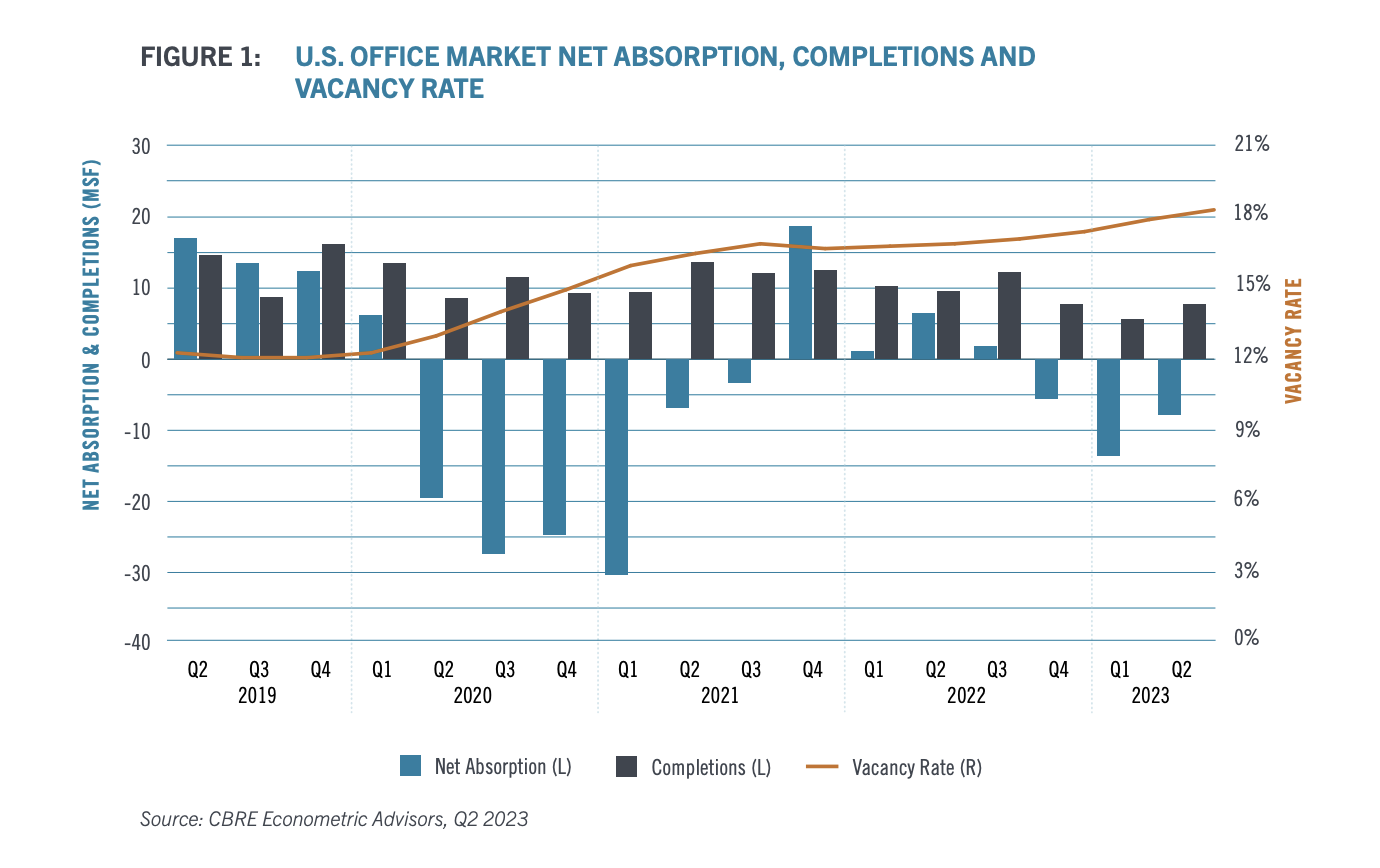
- Disparities in Vacancy: A tenth of U.S. office buildings contribute to 80 percent of the overall increase in vacancy since Q1 2020. These commodity buildings, often in high-crime areas without amenities, lag in returning to office use, while others outperform average vacancy rates.
- Challenges in Building Transformation: Tight lending standards, higher interest rates, and increased construction costs have limited the feasibility of extensive renovation or conversion projects for many functionally obsolete office buildings, making public subsidies essential for the majority of initiatives.